Birds

Photo by Ken Phenicie, USGS

Birds of the Bay

The San Francisco Estuary is a critical environment for birds. Over a million shorebirds use the estuary during migration each year and it is a high priority area for wintering waterfowl, supporting nearly half of some diving duck species of the lower Pacific Flyway. The estuary also supports several resident populations of threatened and endangered bird species that rely on shoreline habitats for breeding and foraging. We highlight three diverse types of birds that either migrate to or live in the San Francisco Bay and whose foraging habits would benefit from the diversity that comes with established Olympia oyster beds.
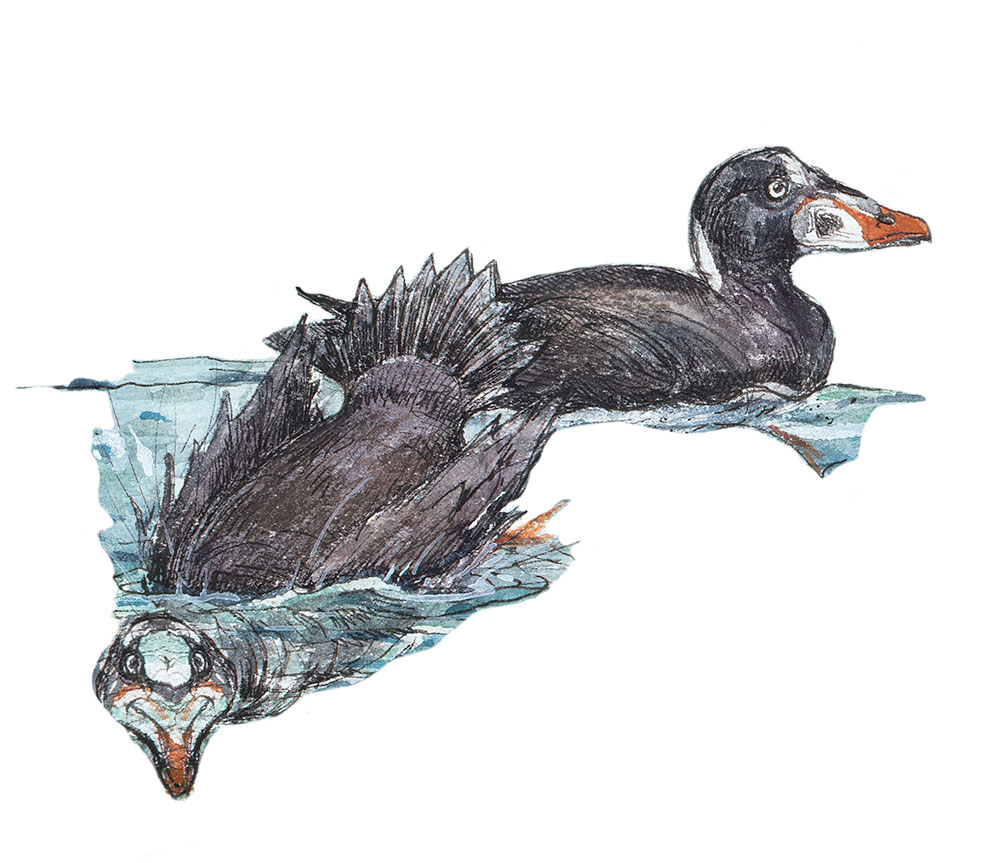
Surf Scoter
Melanitta perpicillata

Surf Scoter

In 2018 the annual count of surf scoters indicated a robust resurgence of these overwintering diving ducks after decades of decline. Thousands of the black males with bright orange beaks could be seen that winter bobbing in the eelgrass beds of San Pablo and Suisin Bays, and more than ever seen in the South Bay. Since then surf scoter and other migrating diving duck populations have maintained their numbers, indicating that the San Francisco Bay is still their estuary of choice for foraging during the winter months, a significant contribution to the great Pacific flyway. These ducks are sensitive to food resources so their numbers let us know about the health of the Bay generally, and more specifically how the underwater resources of clams, oysters, crabs, shrimp, and other crustaceans typical of the eelgrass and oyster beds are doing.

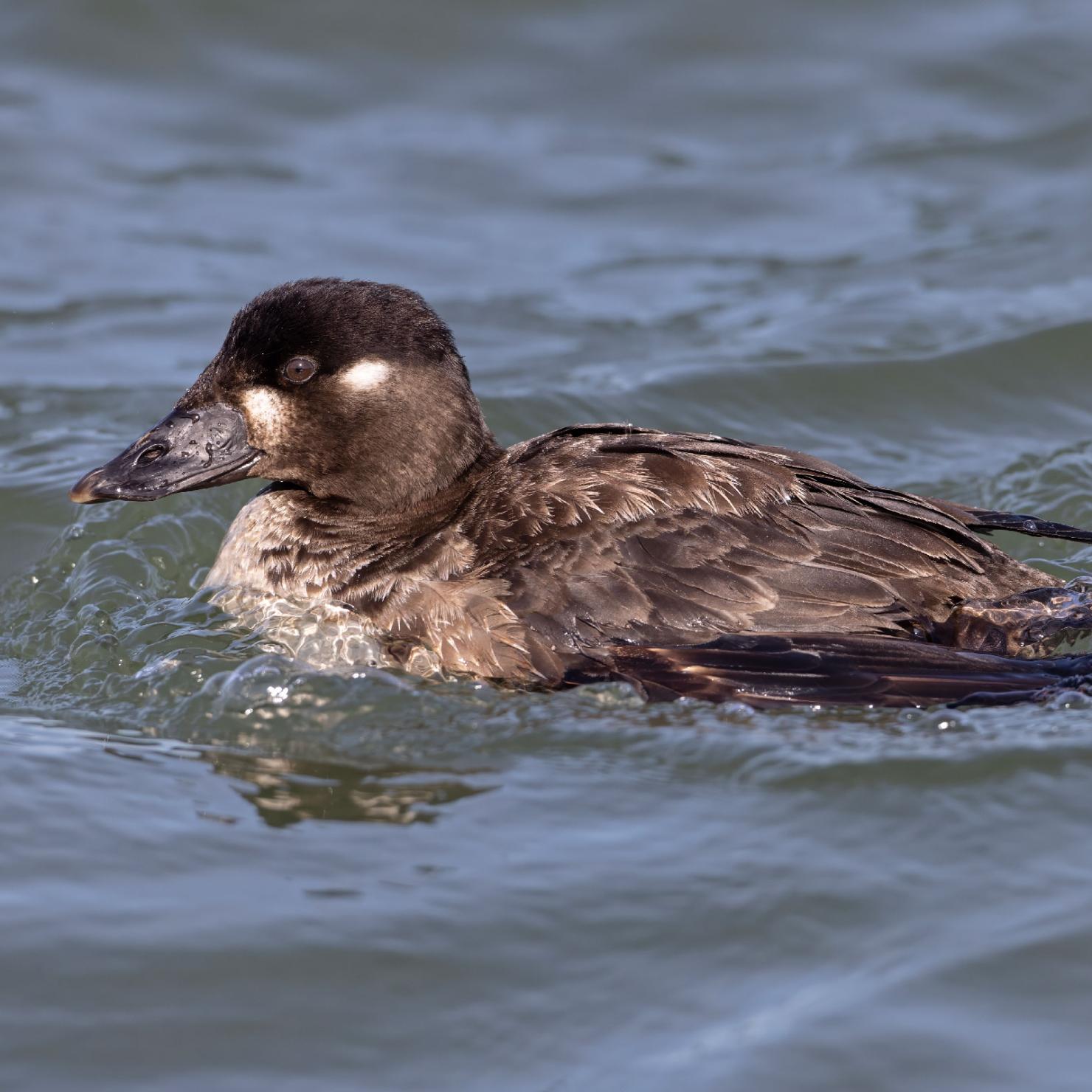
Hen surf scooter

A Hen Surf Scoter

Photo by Chuck Homler / FocusOnWildlife.Me

Diving ducks dive. They spend time on the bottom using their strong beaks to pry bivalves and other mollusks off the bottom. Native Olympia oyster reefs generate a physical complexity of the terrain on the bottom that encourages a greater variety of marine invertebrates—isopods and marine worms, small crabs and shrimps, all delicious and nutritious for diving ducks like surf scoters. The nearby eelgrass patches enhance the availability of small fish, another bonus meal for diving ducks.

But perhaps the surf scoter’s favorite forage is herring roe on eelgrass or seaweed. They will change their location to find the herring roe once the herring spawn has reached fruition along the edges of the Bay, coating the Zostera or Fucus blades with the sticky, delicious, and healthy eggs. The once famous spawn of Pacific herring along the edges of San Francisco Bay creates a bonanza for scoters and other diving ducks.

Great Blue Heron 
Ardea herodias

Great Blue Heron

Great Blue Heron

Great Blue Heron

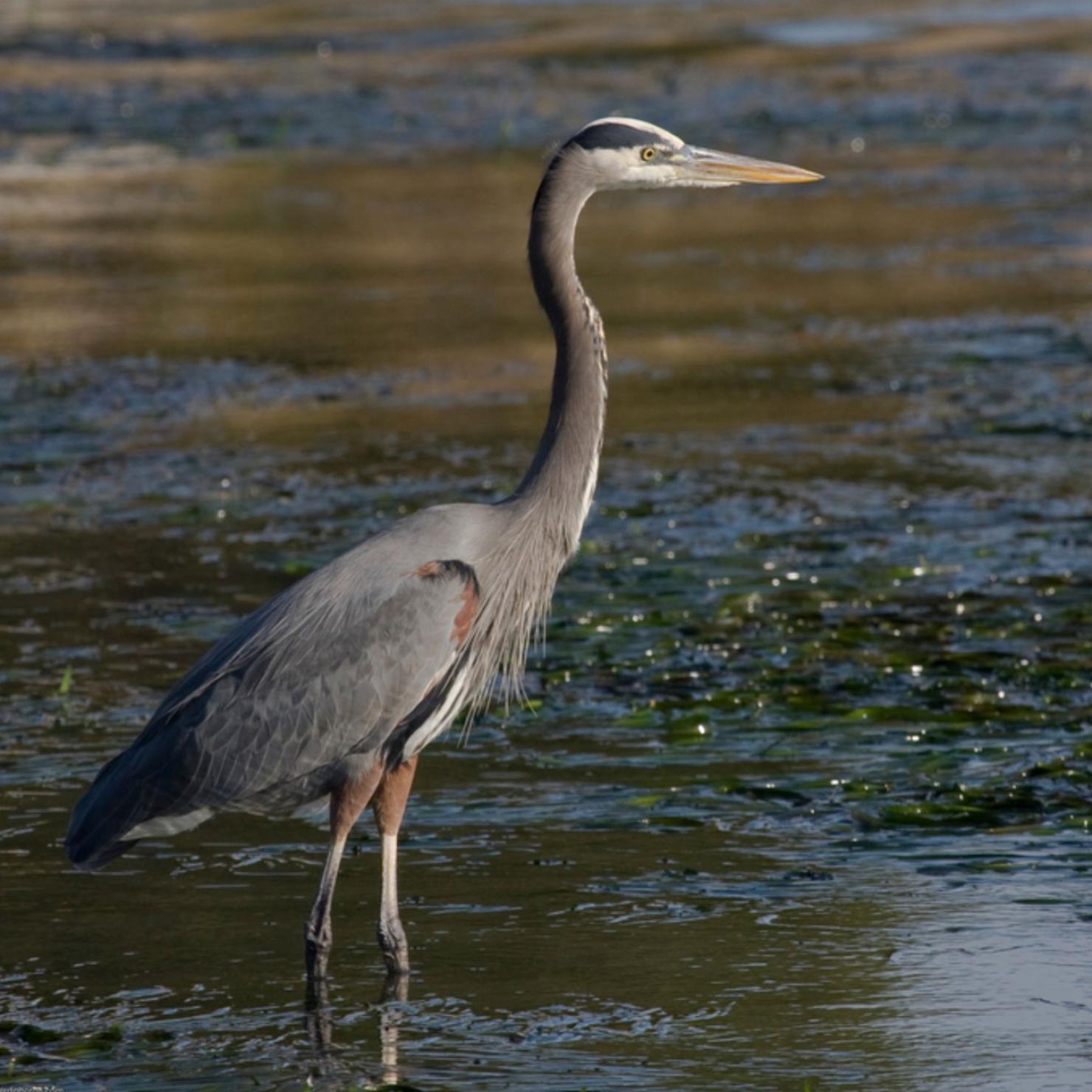
Photo by Mike Baird

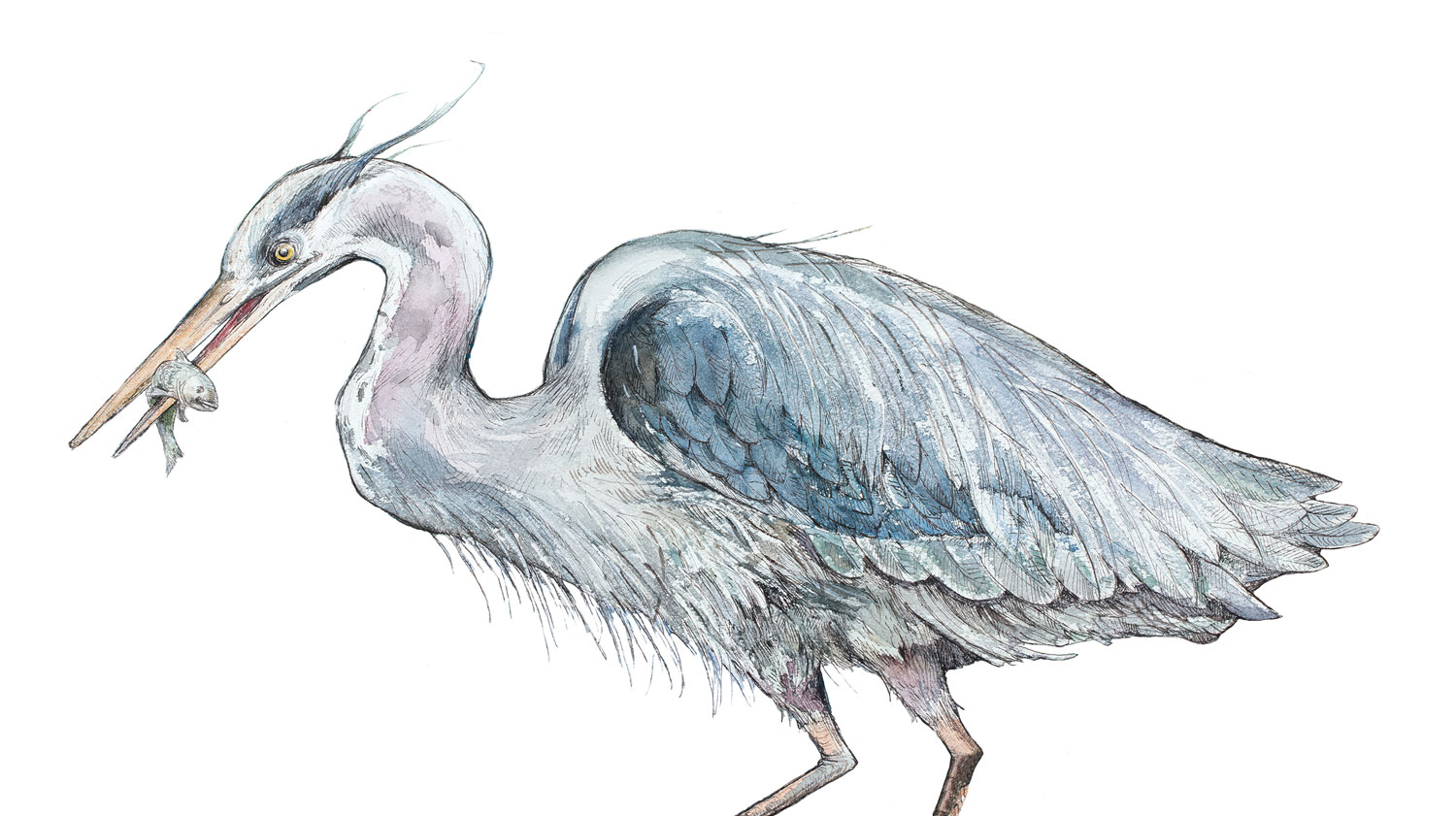
The great blue heron perched on a rotting stump, hunched and watching over the estuary, as if an aged and wise elder, is a sight that stays fixed in one’s mind’s eye forever. Whether overlooking the constant swooping of least terns and diving sea otters at Elkhorn Slough, or the growing bird life of the restored Heron’s Head wetlands, the great blue heron is a singular sight. When stalking for fish or other food in the shallows, on its long spindly legs, the heron is very patient. It can stand very still for a long time, watching, and then, wham, it strikes and stands up regally with a fish in its very pointy beak. Sushi!

California Least Tern 
Sternula antillarum browni

California Least Tern

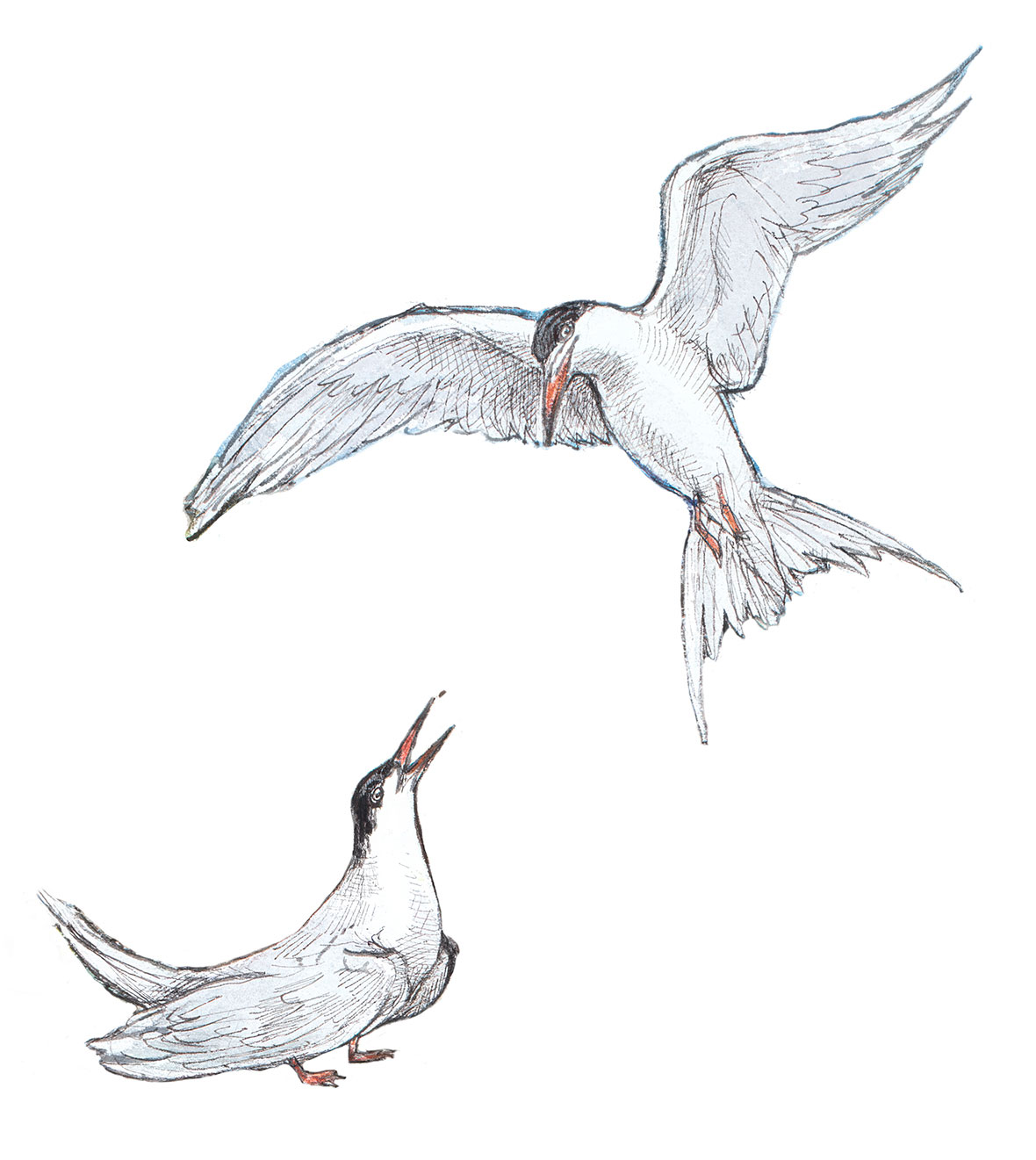
Gulls and terns are ubiquitous avian residents of the San Francisco Bay. While gulls are heavy and plodding, terns are their delicate cousins with pointy wings, forked and pointy tail, and a pointy, usually bright orange or red beak. Terns are avian acrobats, seen swooping, skimming, and diving if kayaking on Richardson Bay or out in Elkhorn Slough. There are a number of different terns that call San Francisco Bay home. In order of biggest to smallest there is the Caspian tern, elegant tern, Forster’s tern, and smallest of all is the California least tern, a species that was on the brink of extinction in the 1970s due to pollution and habitat destruction but has made a comeback. Approximately 100 pairs of these tiny terns, only 9 inches long, have been found nesting in colonies at the Alameda Naval Air Station and the Oakland International Airport, where they are now protected.

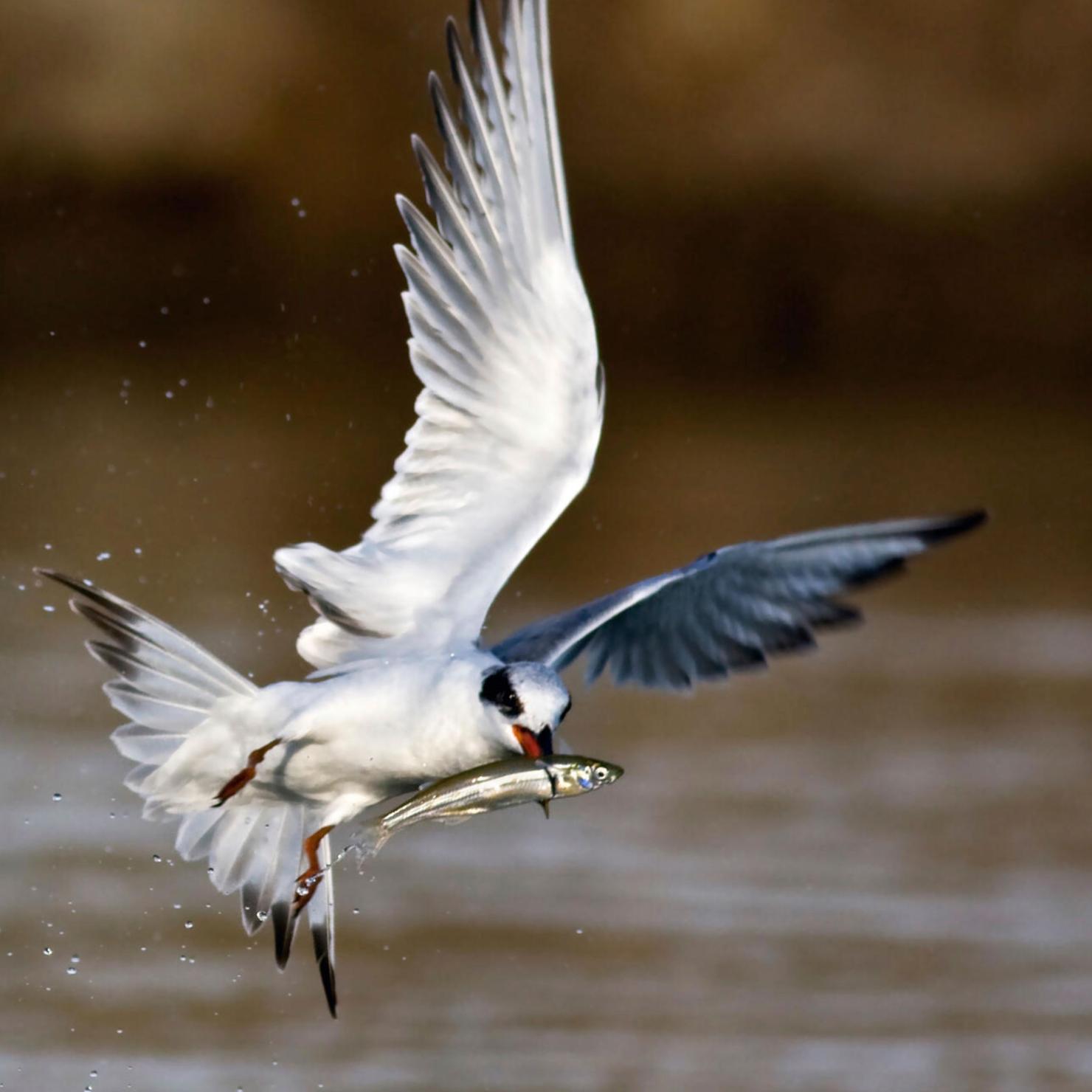
tern flying with fish in its beak

A tern with its prey

Photo by Ken Phenicie, USGS

Terns love the shorelines with eelgrass because they skim and dive for small fish hiding and feeding in the underwater forest. When breeding and mating, males will offer their catch to their partners, leading to graceful aerial displays. But as fish eaters, terns are particularly susceptible to mercury poisoning. The mercury levels in San Francisco Bay have been monitored by the San Francisco Estuary Institute since 2002, and their report on contaminants in Forster’s tern eggs lists mercury as present in eggs every testing year through 2012. Mercury causes a thinning of the egg shells and fail-to-hatch problems. Also, 48% of breeding tern’s blood mercury levels exceeded the risk threshold. 2009-2016 reports all point to Forster’s and Caspian terns as by far the most susceptible of water birds to mercury levels, their risk factors being over triple that of other birds. And the levels can accumulate quickly. The more time these birds spend in the Bay in the months between arrival and breeding, the more mercury accumulates. Both terns and surf scoters accumulate mercury at an alarming rate.

Toxic Legacy

Mercury pollution in San Francisco Bay is an invisible poison affecting all layers of the food web including us humans. It has a long legacy, dating back to the Gold Rush when mercury was used to extract gold from ore and washed down into the Bay with the sediments. Industrial runoff throughout the Bay also leaves mercury and a particularly toxic variant, methylmercury, which accumulates in fish and wildlife. The USGS is beginning a project to map mercury species throughout the bay, to track where and when spikes of mercury occur, especially as ecosystem restoration is progressing and as climate-driven storms churn up the bottom sediments, releasing previously stored mercury. There is work to do.