The History of Olympia Oysters in San Francisco Bay

An 1860 French print of San Francisco with residents on the hill in the foreground. Image from the Library of Congress
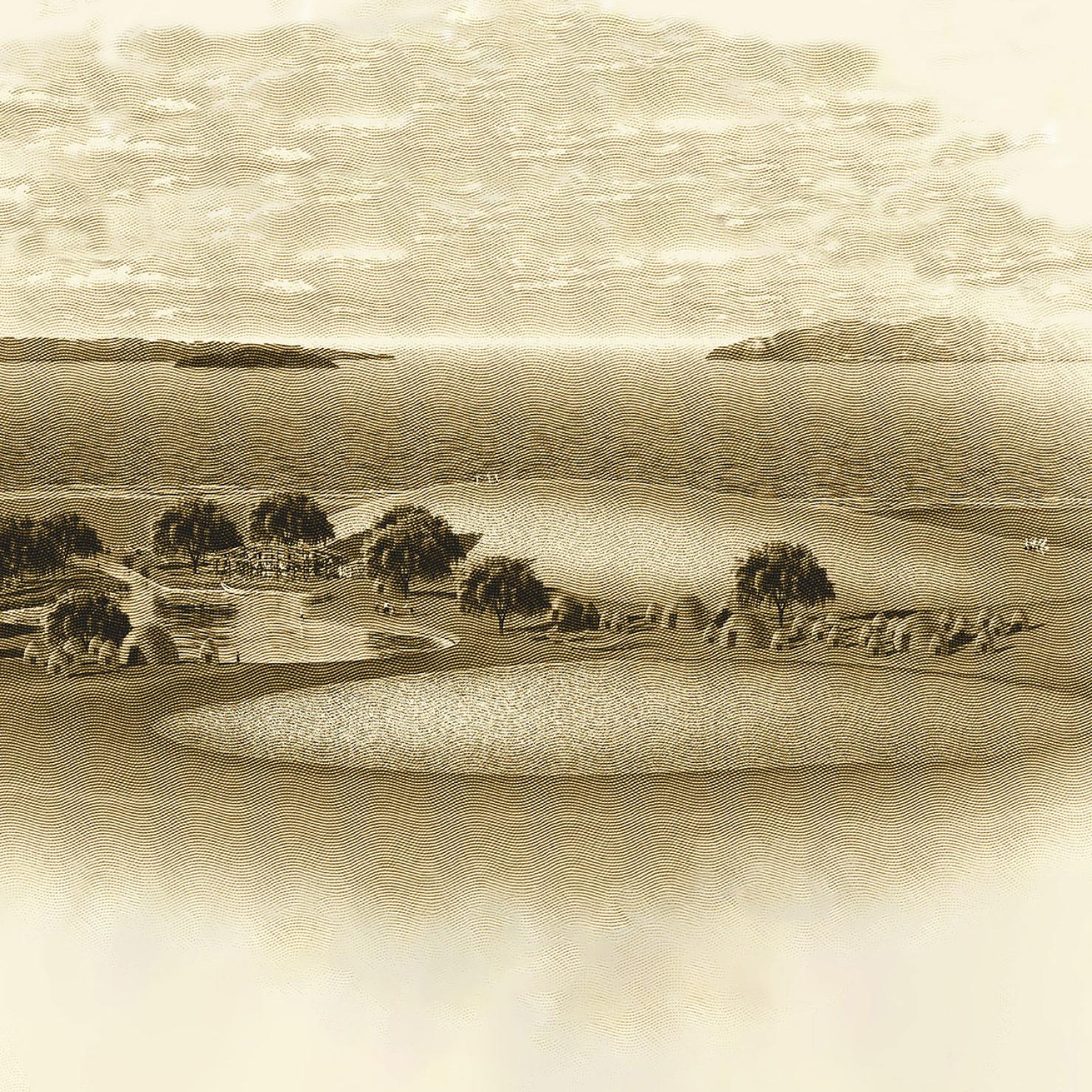
illustration of shell mound and bay

West Berkeley Shellmound and Ohlone village

Rendering by Chris Walker

A Colorful History

1800 – 2025

The San Francisco Bay was created at the end of the last ice age, filling with melting glaciers and rising seas. The Olympia oysters, eelgrass, adjacent organisms, and estuarine fishes moved into this zone protected from the rigors of the open coast. The remarkable productivity of life spreads at the margins of the Bay, where free-floating plankton harness the energy of the sun, turning plant matter into protein— serving as the conveyor belt of health for all sorts of aquatic animals. Juvenile salmon come down from the rivers into the Bay before going out to the ocean, and other fish come from the ocean into the Bay to reproduce. Young fish grow quickly in these fertile waters. Olympia oysters also found their needs well met: plentiful phytoplankton to fatten and grow on, water just warm enough for reproduction and salty enough to be happy, and enough hard substrate to attach to and establish a layer of their own kind to create the underpinning of oyster beds underwater and along the edges of the Bay.
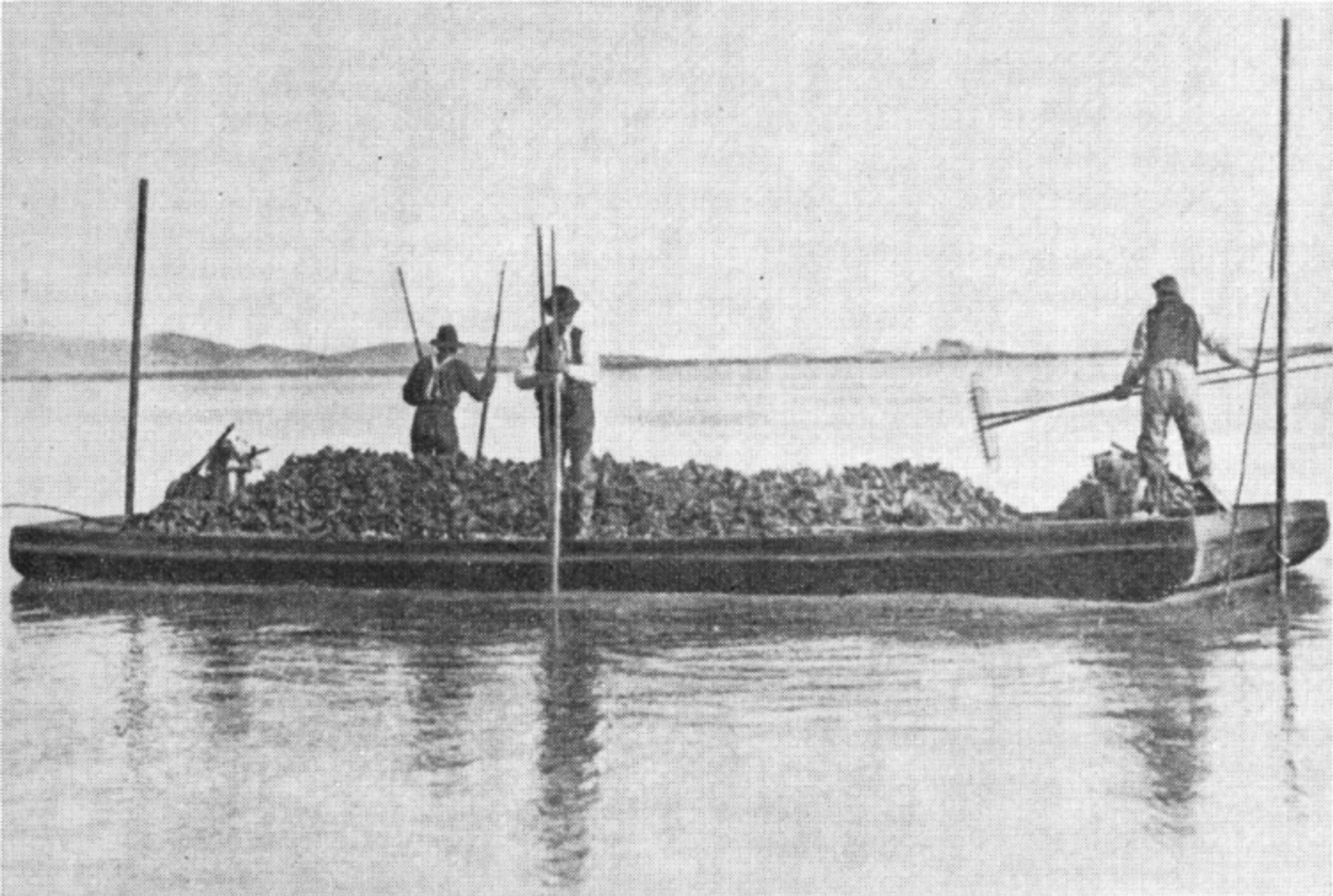
Tonging eastern oysters, south San Francisco Bay, 1890s.

Photo by Townsend, 1893

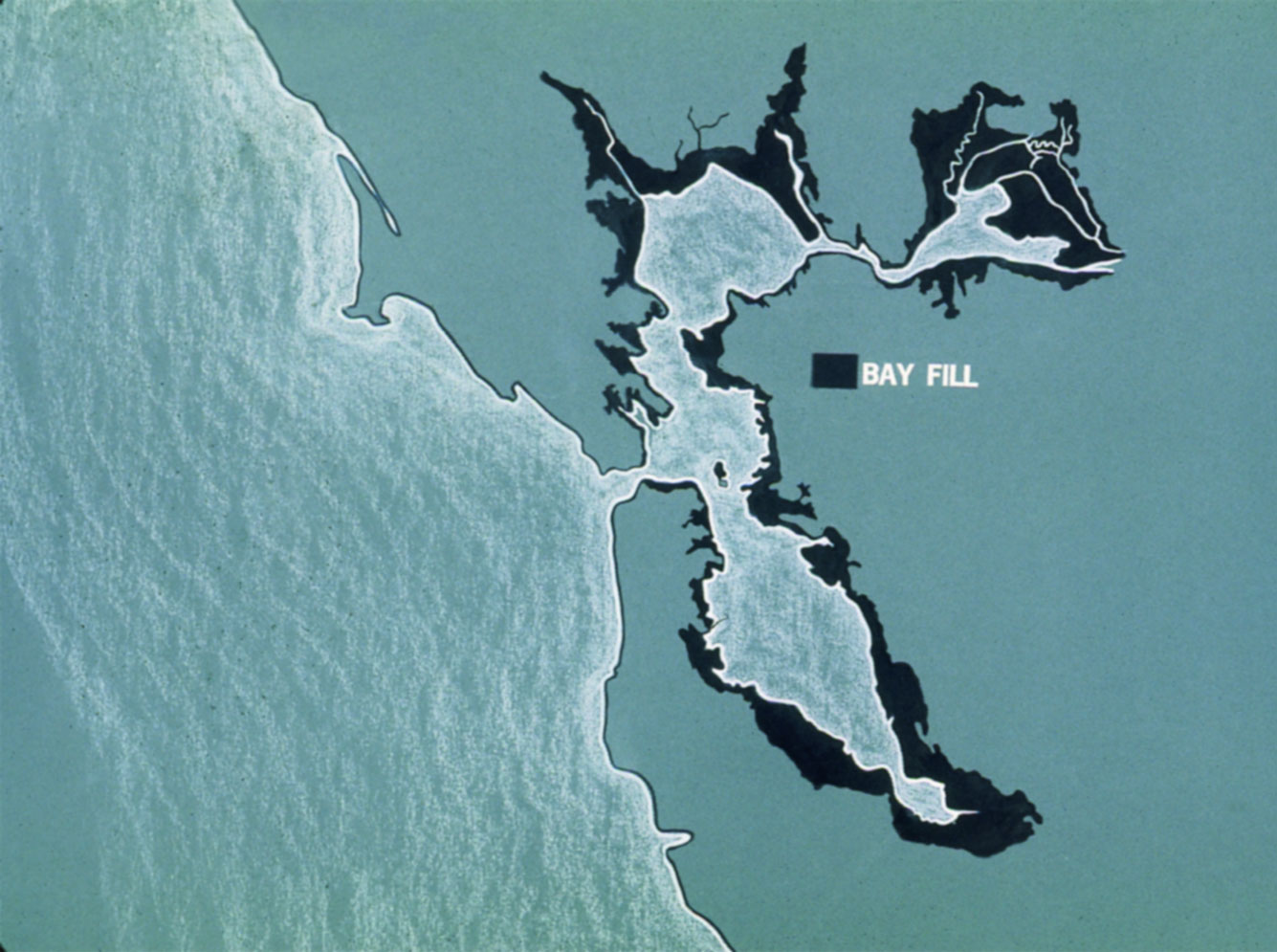
Bay Fill: From 1850-1960 much of the Bay’s wetlands were filled in. The footprint of the Bay today is 30% smaller than in 1800.

While Oly populations surely fluctuated with the constant dynamics of the Bay, and their tiny size and slow growth did not create massive beds like eastern oyster reefs in New York Harbor, the Chesapeake Bay, or the Louisiana bayous, their presence in millennia-old shellmounds and in sediment cores dating back 1,500 years testify to this being the Olympia oyster’s home.

Shellmounds are just one indicator of the shaping of the Bay’s shores by human hands, but radical changes began at the end of the Mexican-American War, when San Francisco and its surrounding areas became part of the United States. The native oyster offers an interesting point of view on one of the great paradoxes of these estuarine marshlands: on the one hand, they are spaces of incomparable biodiversity and productivity; on the other hand, they are almost completely unrecognizable as freeways, bridges, airports, naval bases, oil refineries, fishing wharfs, and industrial ports filled in and rebuilt these shorelines. Near-constant dredging has redefined the underwater bathymetry as well. Almost a third of the Bay’s surface area is gone; the edges are pushed out and filled in. It started quickly and accelerated with the Gold Rush and its aftermath. In 1869, San Francisco surveyors were out surveying the mud around the edges of the city, watery areas soon to become city blocks and streets.

The Commons

Bounty at the Bay’s Margin

For Indigenous tribes around the Bay and early settlers of San Francisco and Oakland, the mudflats at the edges of each city were the commons, a place to forage for clams, mussels, and oysters, a source of plentiful, free protein. As populations of the cities and towns around the Bay ballooned, the shorelines changed, and the value of the native Olympia oyster changed as well. The timeline from Oly abundance to Oly scarcity is a timeline full of surprises.

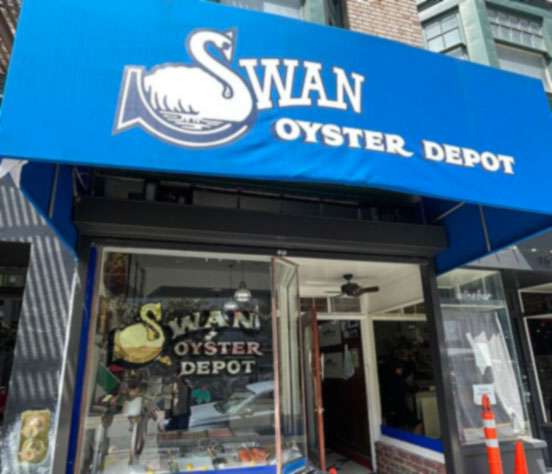
Swan Oyster Depot

Photo by Rafaelquint99

“Oh Friend Get Yours / We Serve / Olympia Oysters”

Swan Oyster Depot, Polk Street, SF (the longest continuously running seafood restaurant in America) 19th century advertisement

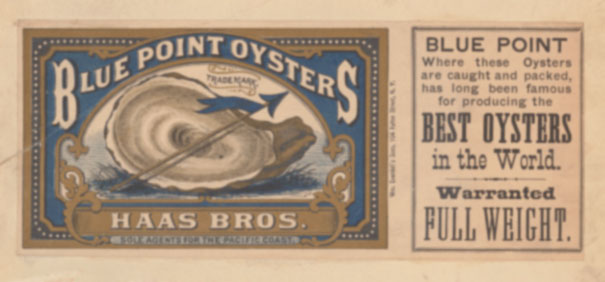
Trademark registration by Haas Brothers for Blue Point brand Oysters.

Photo from Library of Congress Prints and Photographs Division

East Coast Oysters Come with the Railroad

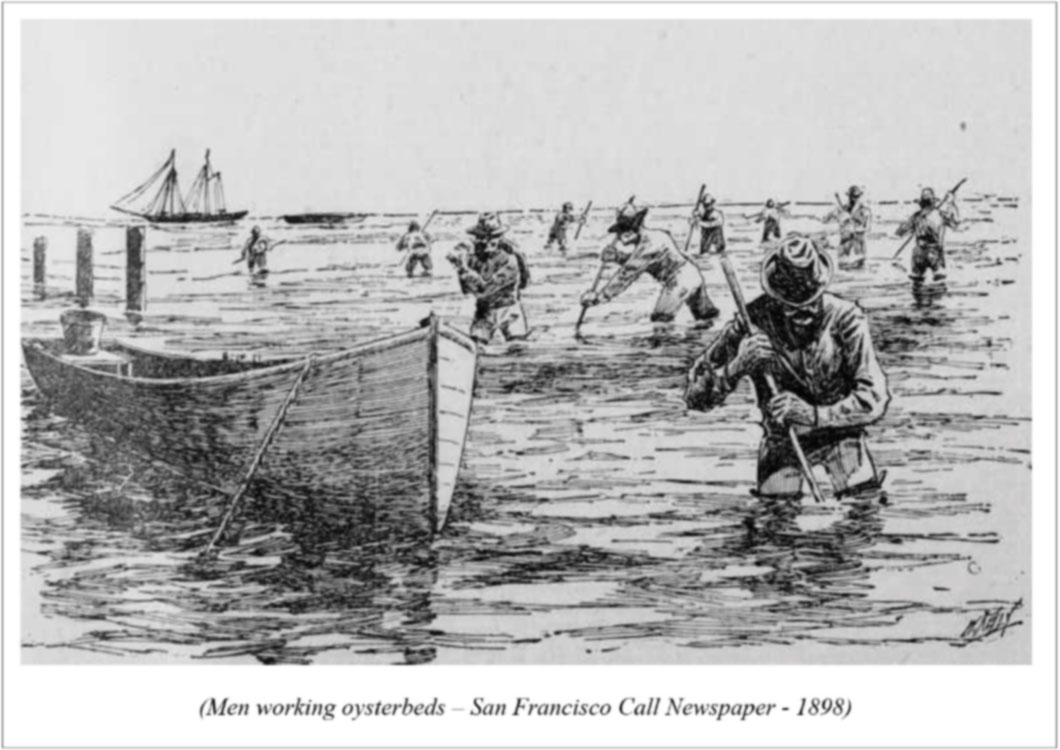
New arrivals to San Francisco were predominantly from the East Coast and they brought with them a craving for oysters. The eateries of San Francisco served the small native Olympia oysters with its distinctive mineral-rich taste. And with the Gold Rush of 1849, an onslaught of demand for oysters grew throughout the area, even into the foothills full of panning goldminers. Oysters seemed plentiful in the San Francisco Bay: Oystermen would rake the oysters at low tide from the muddy shore, or use long-handled, hinged tines to pluck from the deeper, underwater beds and fill their flat-bottomed skiffs. In the nearby foothills, celebrating a strike of gold with oysters created the Hangtown Fry of scrambled eggs and oysters with bacon—the most expensive items on any menu of the day. Alas, it took only a few years to rake out the oyster beds of San Francisco Bay. By taking all size classes, no adults were left to spawn, and no one realized how important it is to put shell back into the harvest zone for larvae to settle on. Shells were sold off to the makers of cement and poultry feed. All of the construction and disturbance in the bay also caused increased silt, burying shorelines and other hard substrate the larval oysters need to settle on. But the market demanded oysters, so Olympia oysters were shipped down from the great beds of Willapa Bay and Puget Sound in Washington State to fill the restaurants of San Francisco.

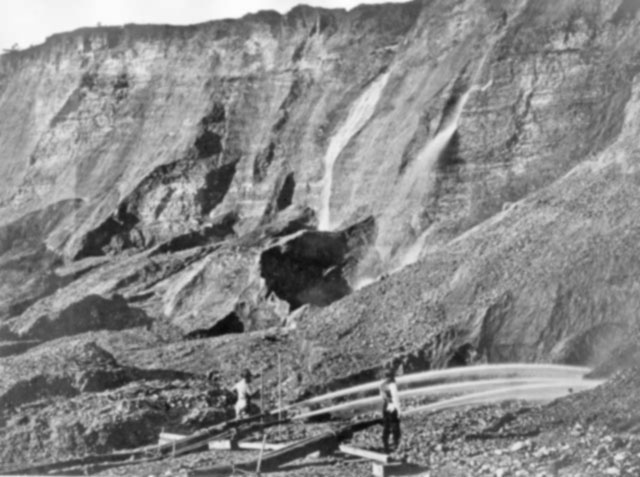
View of gold miners excavating an eroded bluff with jets of water at a placer mine in Dutch Flat, California, between 1857 and 1870.

Photo from Denver Public Library

Leveling Mountains & Filling The Bay

Greater destruction of the oyster’s world came from the Gold Rush’s crude mining techniques than from the human demand for oysters. The lust for gold prompted miners to blast the hillsides of the Sierra foothills with pressurized water cannons. This hydraulic mining brought torrents of toxic sludge down into the waterways of the bay, burying oyster beds and changing the bottom of the bay into nothing but feet and feet of sludge. Whole ecologies along the shore and bottom were buried. Mercury used for mining was also introduced into the sediments washed down in the Bay. Today, the effects of the toxic deluge of mud are still felt throughout the Bay.

And then came the winter of 1862.

“In 1862 this slow-moving landslide coincided with a rare meteorological event to create an unprecedented ecological disaster. Rivers already filled with mining sediments had to absorb the greatest known rainfall in California history. So much water fell from the sky between November 1861 and January 1862 that California’s Central Valley became an “inland sea.” Floodwaters overwhelmed tides in San Francisco Bay, converting the bay into a river for more than two weeks. The floods and the thirty-year underwater landslide of hydraulic mining debris gave San Francisco Bay a new, shallower bottom and swept away its plants and animals.”

Matthew Booker, Oysters of San Francisco Bay, 2006

Lithograph of K Street in the city of Sacramento, California — during the Great Flood of 1862.

Photo from Wikipedia

Eastern Oysters Come West

Eating oysters was a ubiquitous part of 19th-century life. Mark Twain coined the phrase “Heaven on the Half Shell” referring to his San Francisco hotel, known for its excellent oysters, served nightly.

Between 1870 and 1910, San Francisco Bay was home to a thriving but turbulent oyster industry built upon eastern oysters imported from the Atlantic coast on the new transcontinental railway that terminated in Richmond. These oysters were transplanted onto leased tidelands for cultivation. Companies like the Morgan Oyster Company developed large operations across the Bay, seeding millions of oysters shipped by rail and nurturing them in the nutrient-rich estuarine waters near San Mateo and across the Bay. But eastern oysters will not spawn in the Bay. The water is too cold. They grew fast and fetched a good price, but each year’s spat had to be shipped west anew. This privatization of public tidelands led to tension between oyster growers and working-class baymen who saw the oysters as a communal resource. Among these dissenters was Jack London, who famously turned to “oyster pirating” in his youth, raiding private beds in his sloop, the Razzle Dazzle, under cover of night to steal oysters and sell them for quick profit before narrowly escaping law enforcement. These clashes symbolized a broader conflict over access to nature’s bounty and the transformation of San Francisco Bay from a shared ecosystem into a contested economic frontier—

“...The winds of adventure blew the oyster pirate sloops up and down San Francisco Bay, from raided oyster-beds and fights at night on shoal and flat, to markets in the morning against city wharves, where peddlers and saloon-keepers came down to buy.”

—Jack London, from his autobiographical novel John Barleycorn

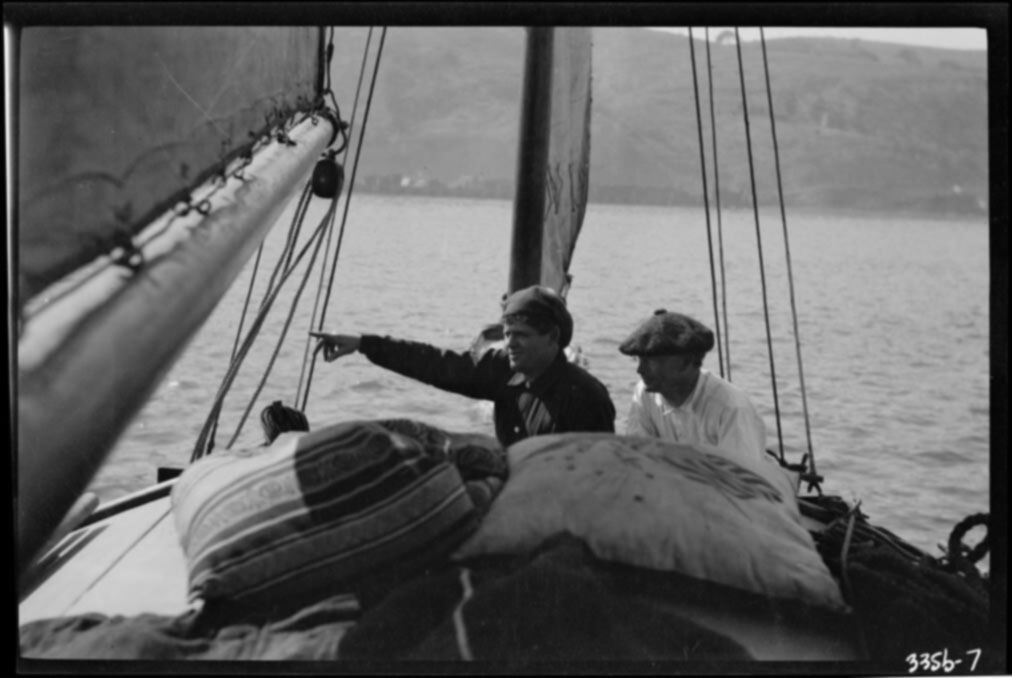
Jack London on his sloop in San Francisco Bay.

Photo from Jack London State Park archives

Men working oysterbeds, 1890s

Photo from San Francisco Call Newspaper - 1898

Interestingly, the imported oysters created a fertile opportunity for Olympia oyster larval settlement, and the smaller native oysters grew readily on the larger Eastern oyster shells. They were considered a nuisance and much time and energy was spent scraping them off the larger oysters before they were sent to market. The shipments of eastern oyster spat also brought a newcomer to the Bay that decimated Olympia oyster populations and remains an obstacle to oyster restoration to this day wherever they are found. The invasive eastern oyster drill, Urosalpinx cinerea, is a snail that will drill a perfect, beveled hole into the oyster shell and efficiently eat the oyster.

“…The waters of the bay contain all manner of fish, wherefore its surface is ploughed by the keels of all manner of fishing boats manned by all manner of fishermen.”

—Jack London, Tales of the Fish Patrol, 1905

While Jack London was the best known oyster pirate plying the waters of San Francisco Bay around the turn of the century, countless fishermen were breaking the rules set forth, even then, to preserve fish populations. Every edible living thing in the bay was fished or pillaged, and the leased oyster beds were no exception. Fishermen of all sorts gill-netted salmon, even on the restricted Sundays, caught sturgeon with illegal hooks, raked out the little Olys, and dark-of-night marauders stole the imported eastern oysters, set up in protected beds. As Jack London recounts in his charming “Tales of the Fish Patrol,” when around 1890 he switched sides and used his considerable sailing skills to catch poachers.

The tremendous productivity of life in the Bay struggled to keep up with the continuous  extraction of that life to feed the growing, hungry human population.

Remembering What 
Not to Forget

The steady decline in the Bay’s health, coupled with continued shoreline development and rebuilding, spelled a constant decline in Olympia oyster populations. The constant dredging and disruption of the bottom for container ships to ply into ports and berths along the city’s edges creates sediment dispersal that leaves little natural substrate for Oly settlement. People forget that rocky headlands and rocky shorelines were a natural part of the Bay. Extreme weather events, such as atmospheric rivers bringing large amounts of fresh water into the Bay, can kill off an Oly bed as can persistent populations of non-native oyster drills. All of these factors have contributed over time to the demise of the Olympia oyster in San Francisco Bay. Their presence has been absent for so long that the Bay with few Olys is the new normal, a shifted baseline. How do we bring back the memory of Olys so that we can bring back the presence of Olys?

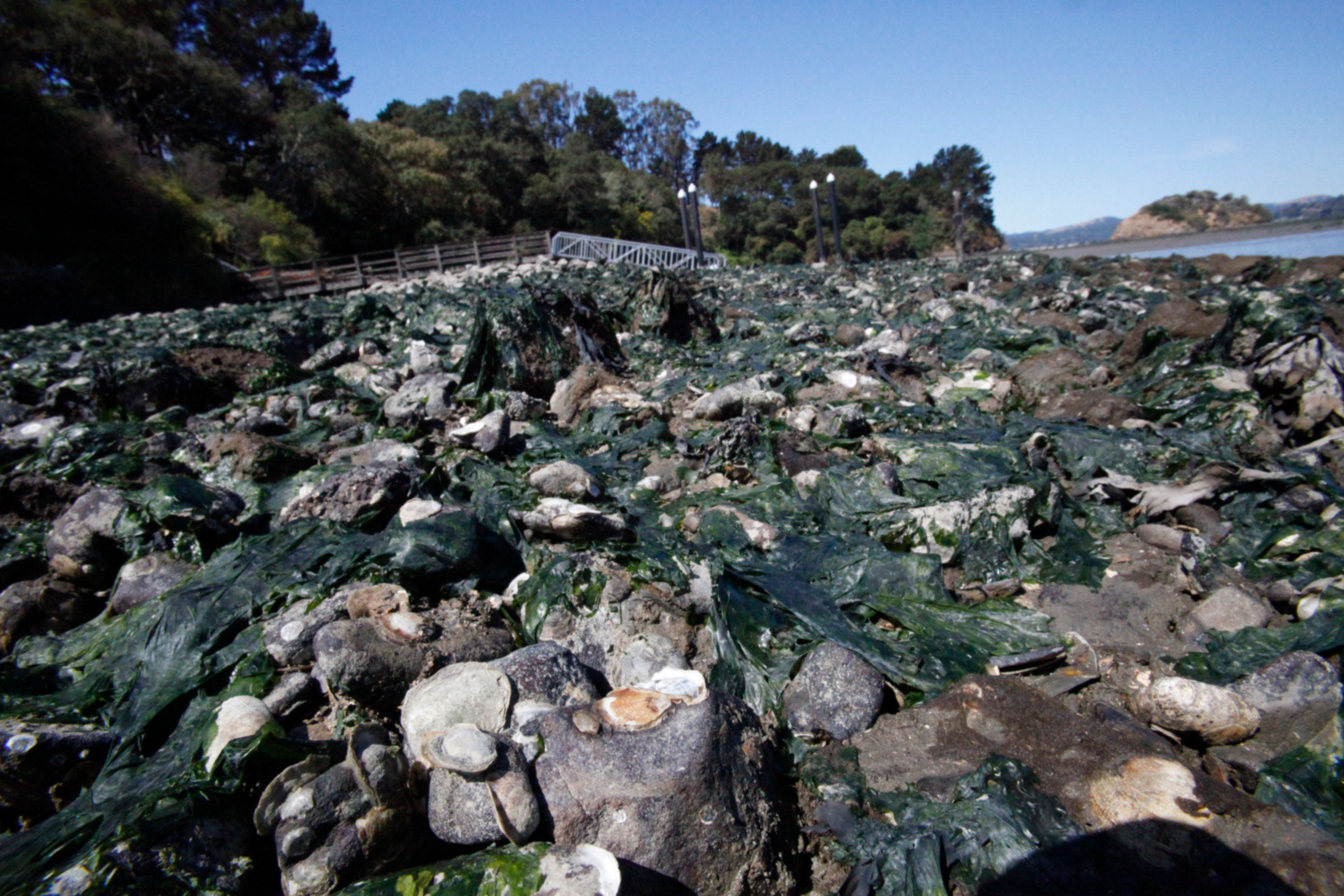
Shoreline with Olys

Photo by Greg Lorenz

But the Olys are Here

In 2001, Save the Bay staff, Marilyn Latta and volunteers, attached some clean Pacific oyster half shells on ropes and hung them like vertical necklaces from the Fruitvale Bridge at the mouth of Sausal Creek in the Oakland Estuary to see if there might be recruitment of native oysters onto the shells. On September 11, 2001, Marilyn and enthusiastic volunteers from both Save the Bay and the Friends of Sausal Creek checked her shell strings at the Fruitvale Bridge in Oakland. She found lots of recruitment, and even a variety of class sizes. Marilyn has been committed to counting, tending, and restoring Olympia oysters in San Francisco Bay ever since. In fact, Olys were finding a home on natural surfaces such as cobble beaches and rocky intertidal areas as well as urban structures like marina docks, pilings, and other hard surfaces built by humans. For many decades, Chela Zabin, working for the Smithsonian Environmental Research Center in Tiburon, surveyed the intertidal and subtidal zones throughout the entire Bay looking for Olympia oysters. And she and other researchers found them—in rocky intertidal places free of silt or fine sediment. They noted invasive oyster drills as a limiting factor in the South Bay and the largest oysters were in saltier water...but they found Olys everywhere.